PARADISE HAS MANY GATES
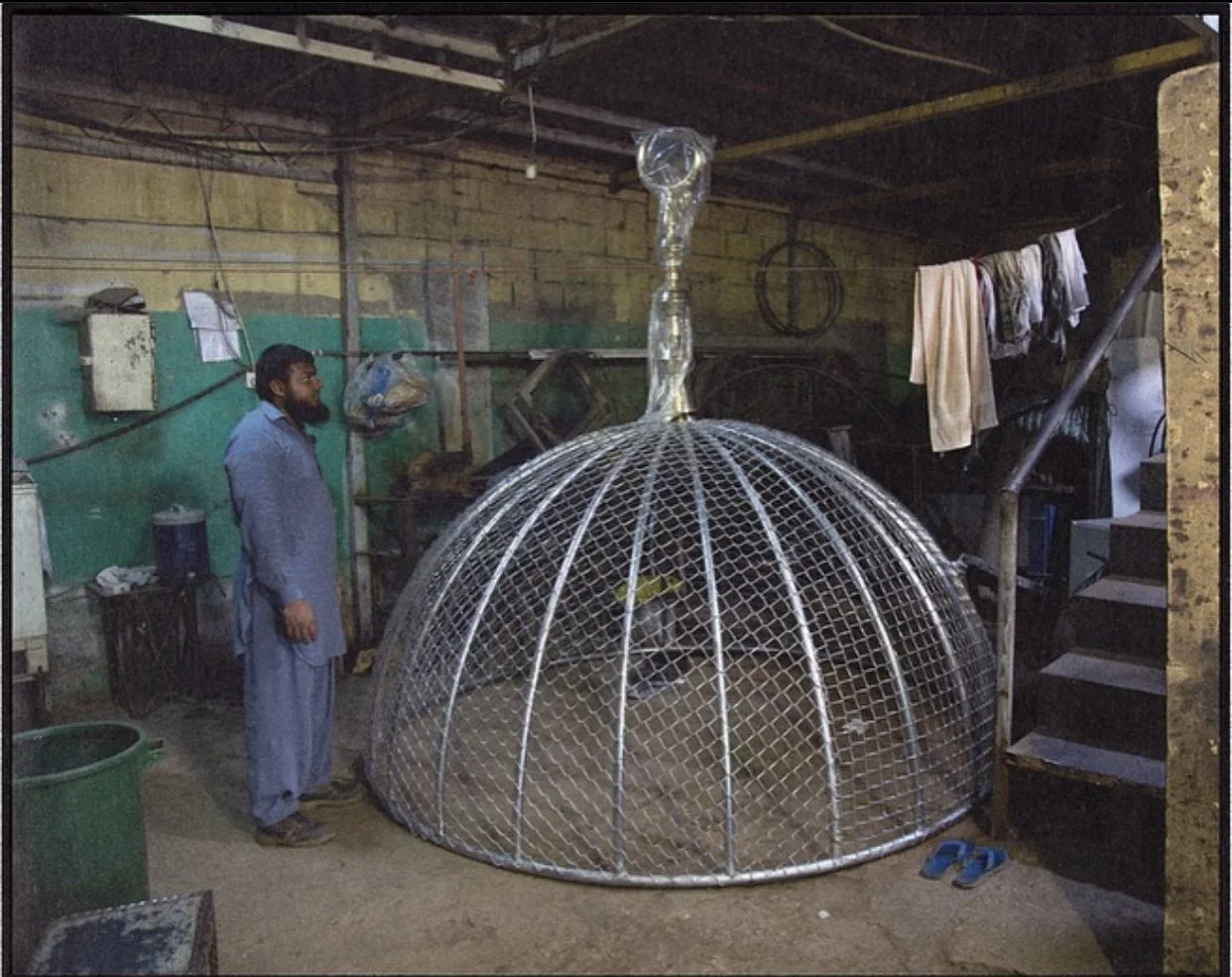
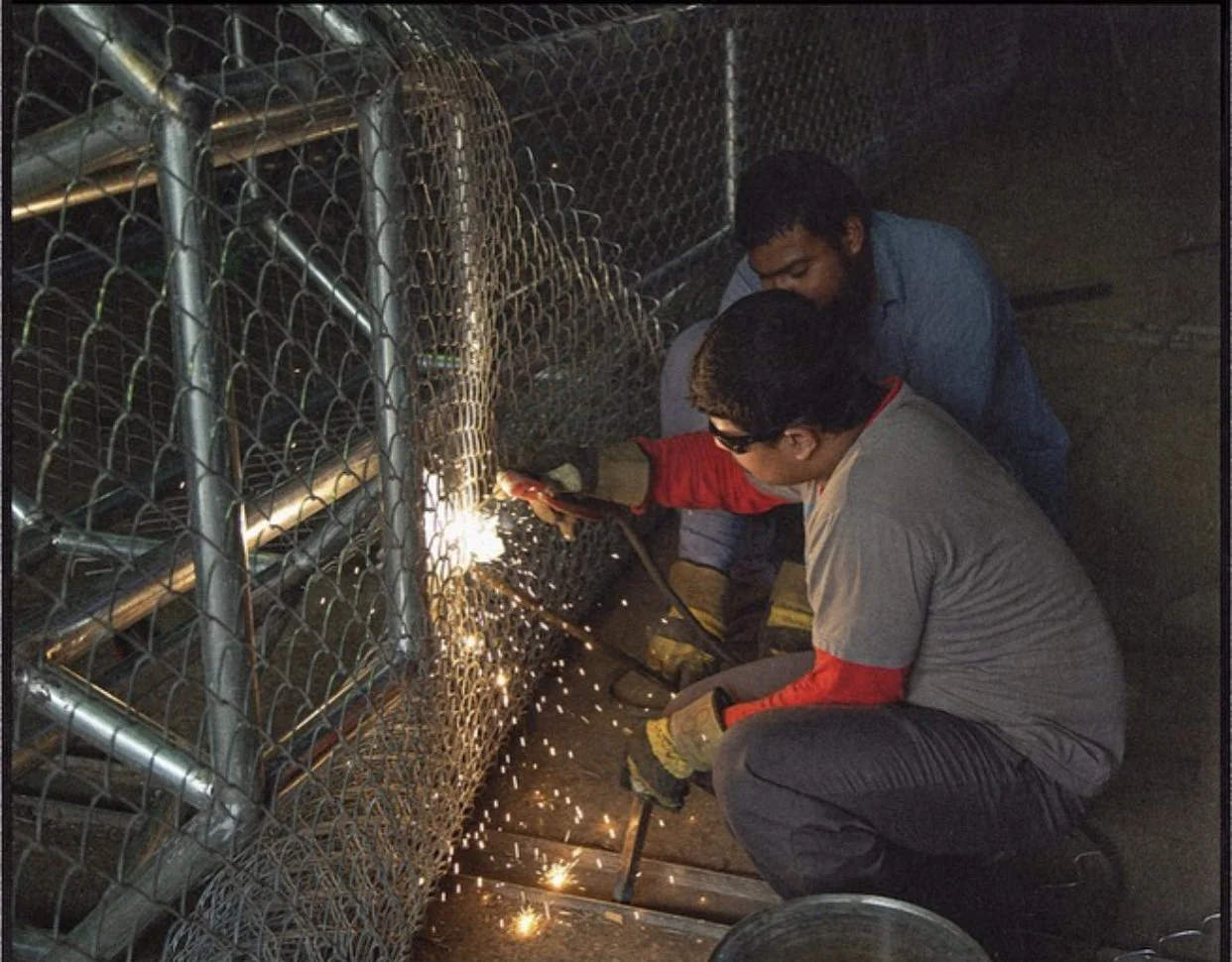
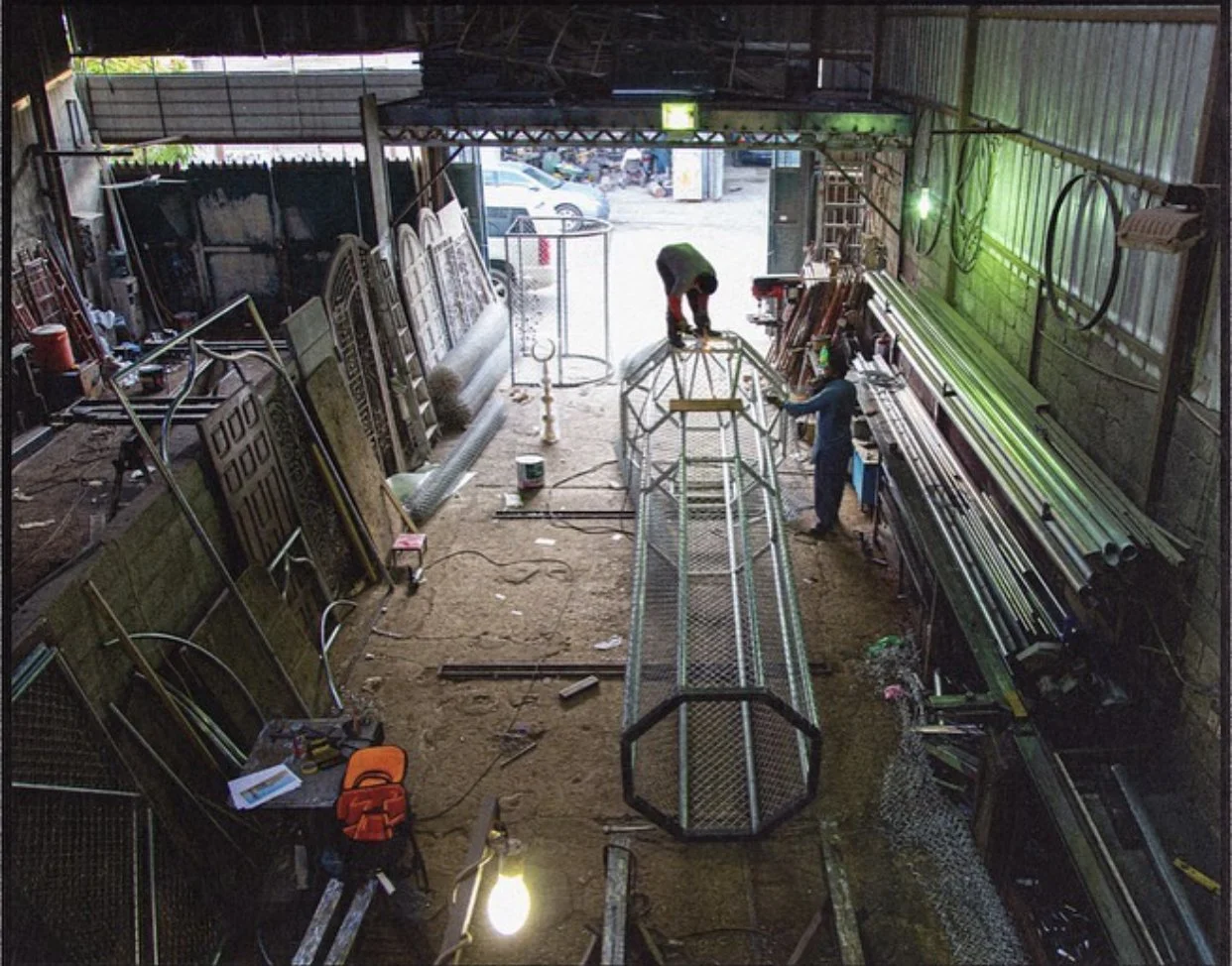
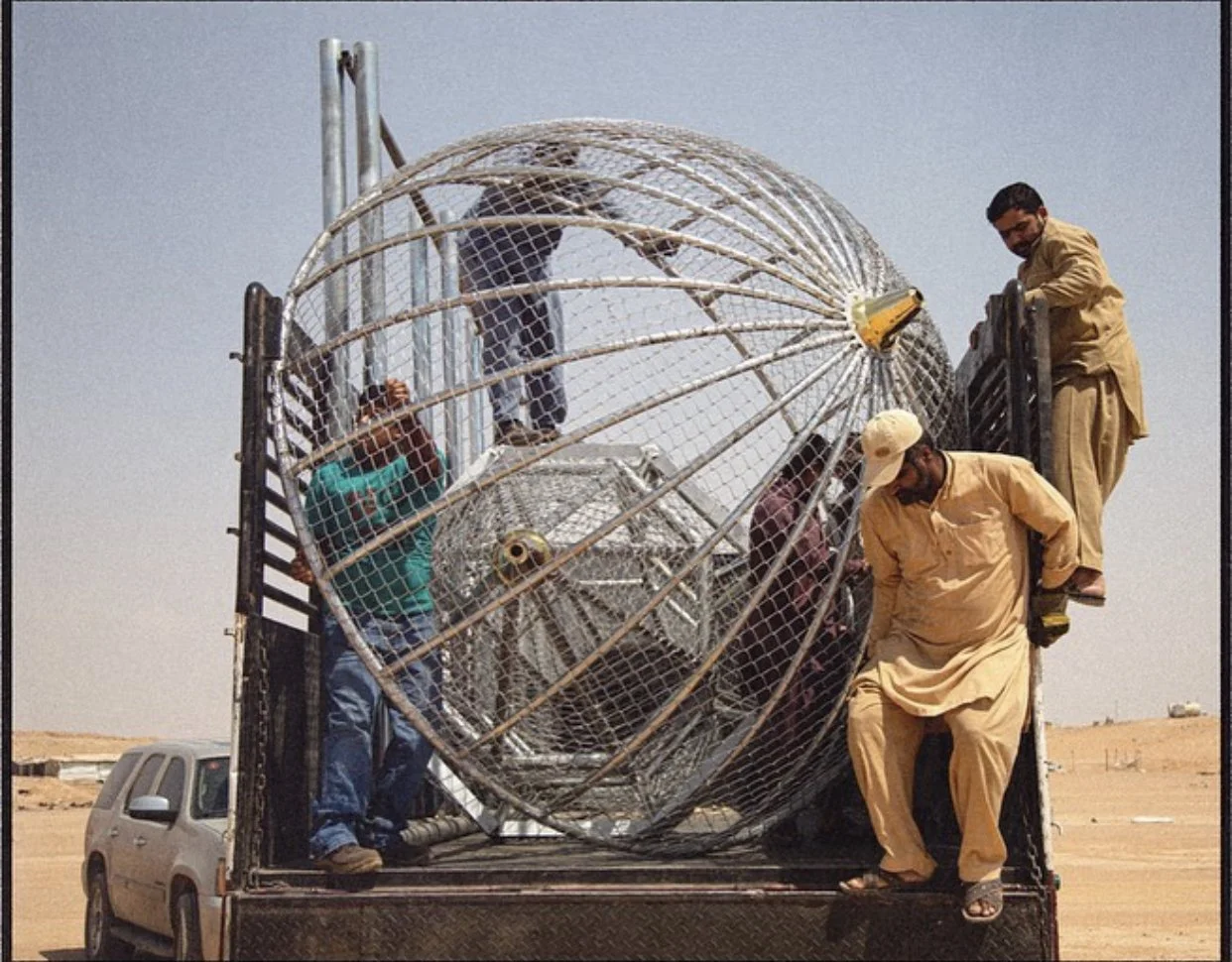
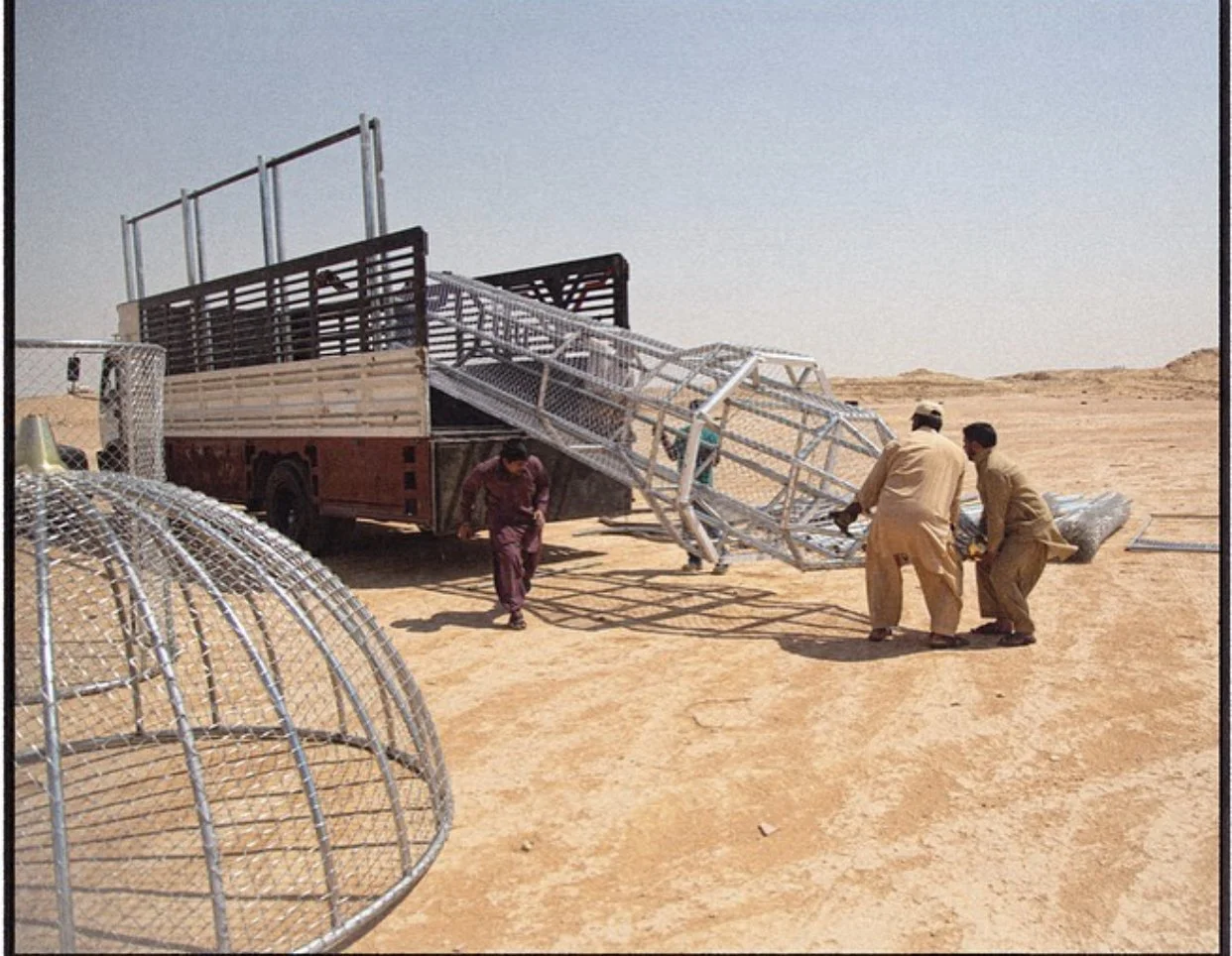
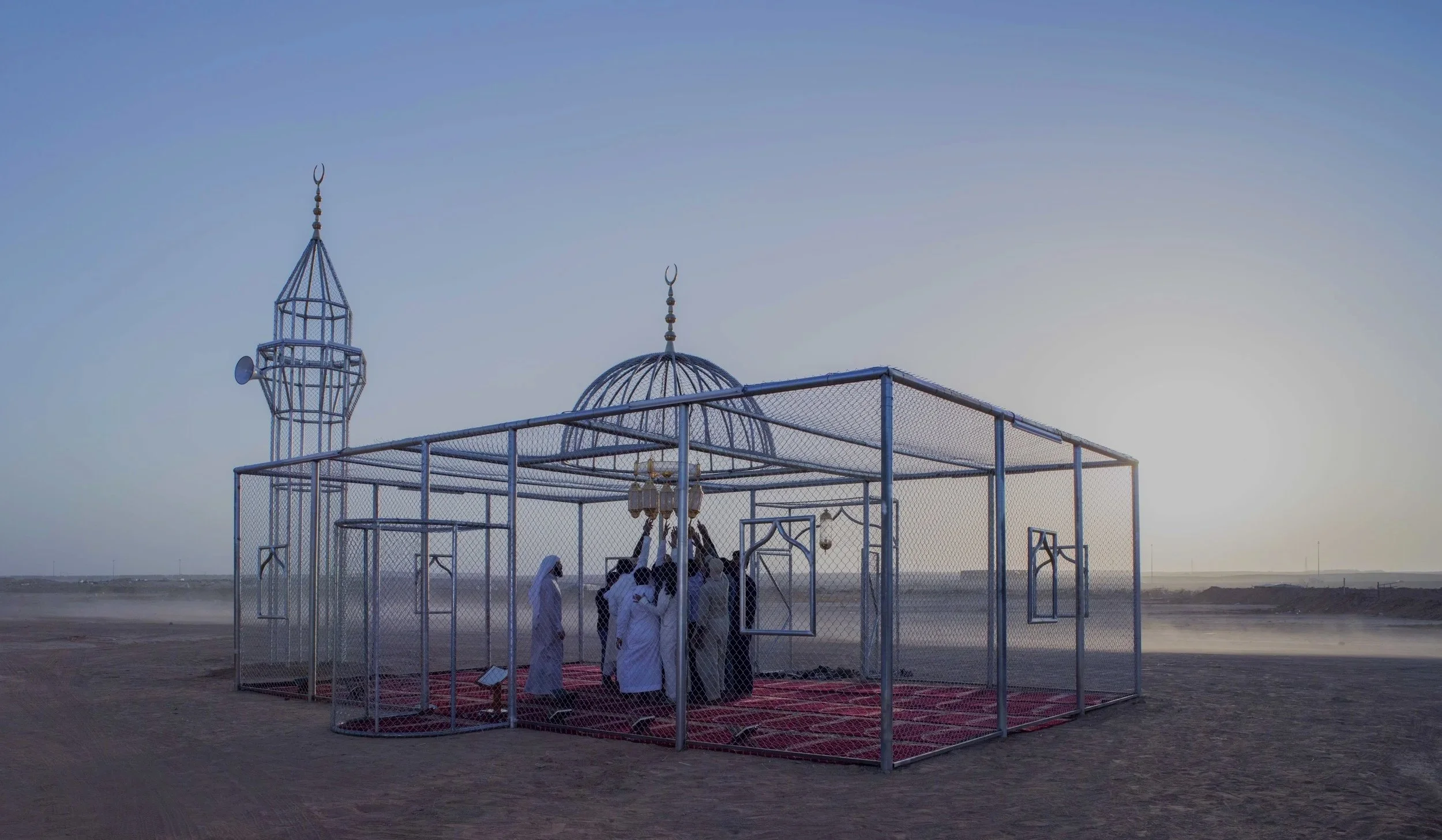
Paradise Has Many Gates, 2015, is true to the design and function of a traditional mosque, but is made of the cage-like chicken wire used for border walls and refugee detention centres. Such material provokes anxiety, but also renders the mosque transparent and open to the elements. The installation’s transparency challenges the political authority that can underpin religion; the installation also seeks to demystify Islamic prayer for non-Muslims, tackling the fear of the other at the heart of Islamophobia. The mosque is welcoming to everyone, and the installation is accompanied by a public programme that invites people of all backgrounds to meet and spend time together.

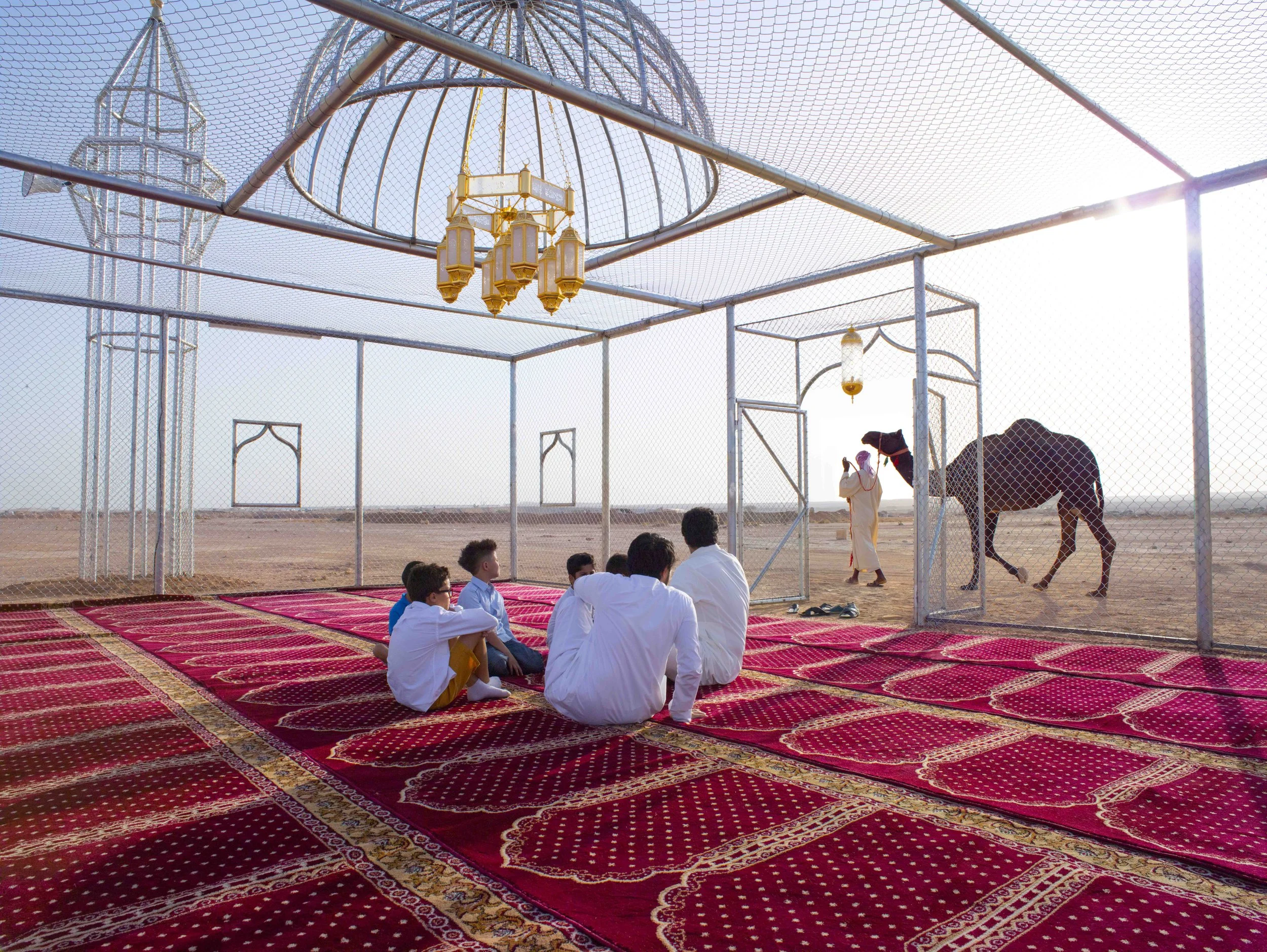
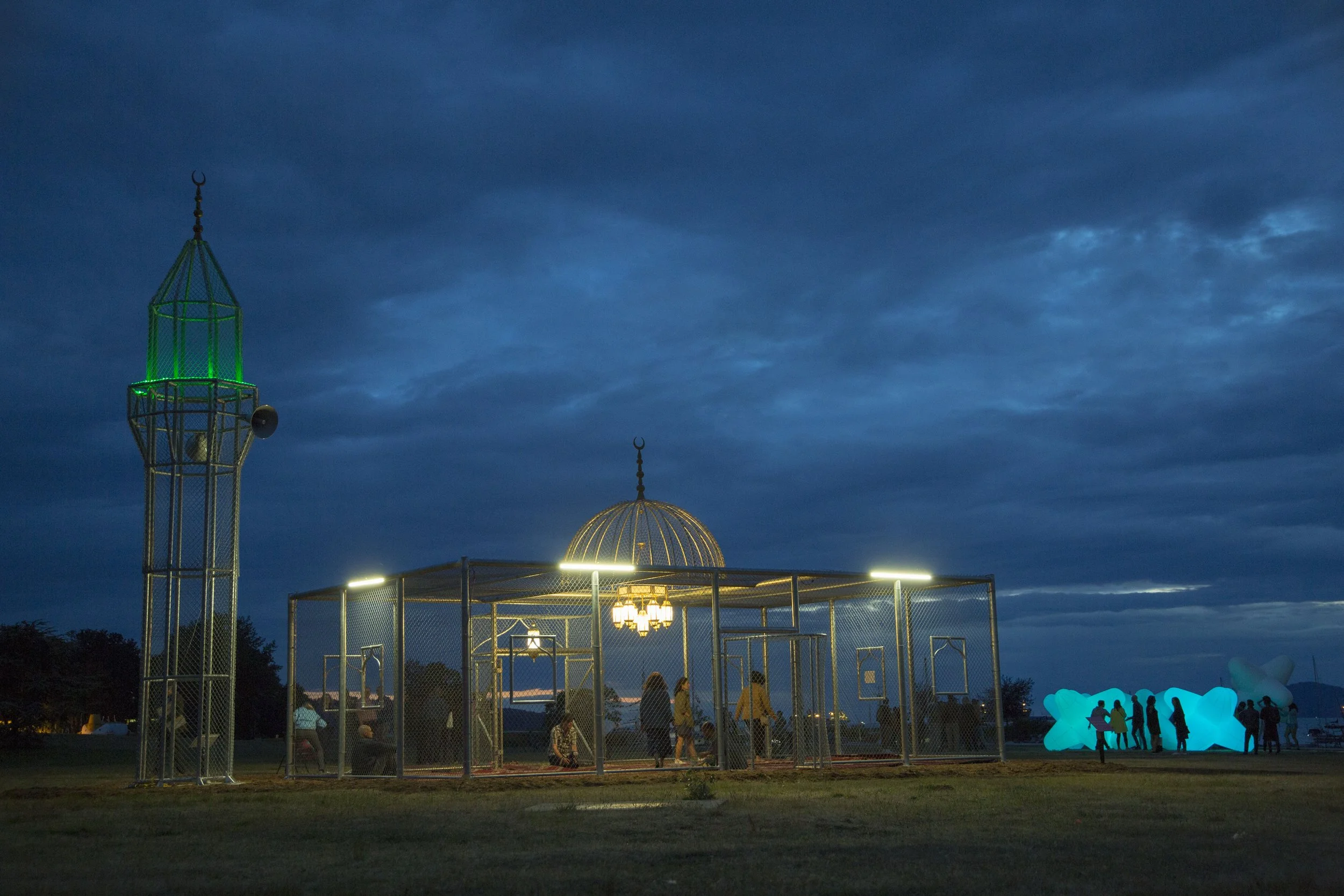
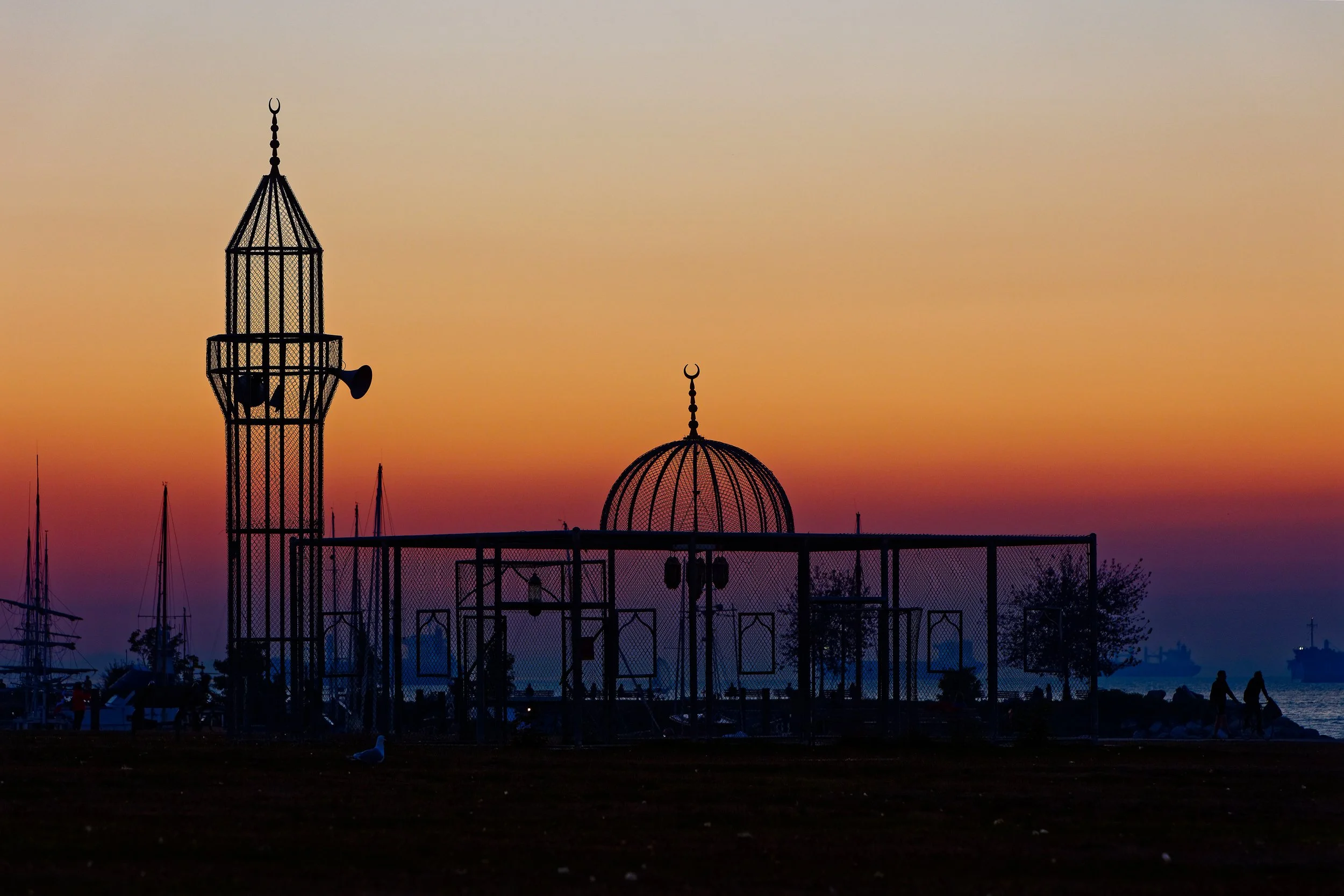
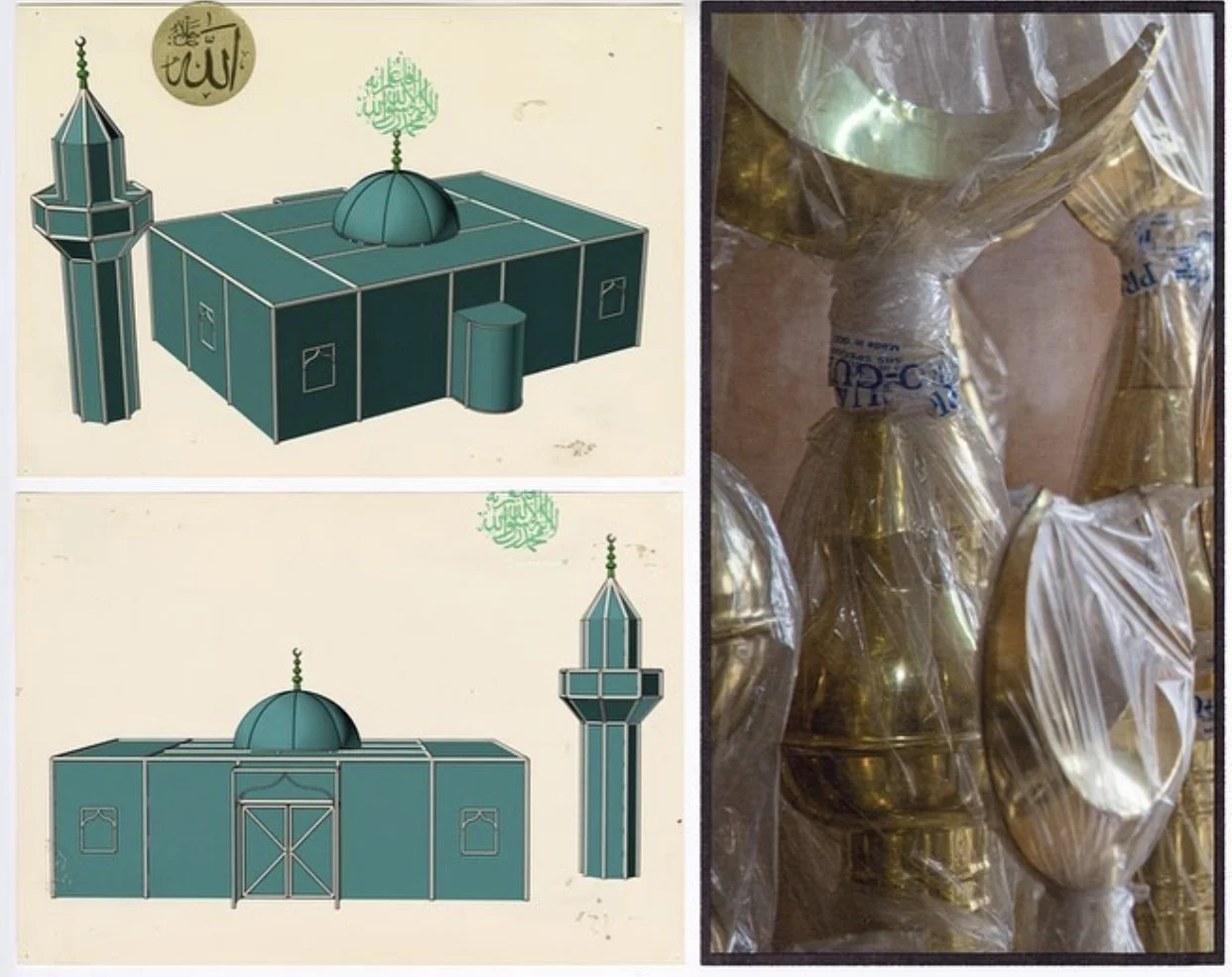
Paradise Has Many Gates is a mosque made of steel tubes and chicken wire. Built to scale, large enough to be occupied by a congregation, the mosque follows traditional form. The main space is rectangular, with a dome on its ceiling, on which sits a metal finial topped with a crescent moon. A chandelier suspended from the dome swings over the mosque floor, which is covered with carpet marking the direction of prayer. Arched windows line the perimeter and to one side is a minaret, bearing another finial, which holds speakers to convey the call to prayer, and strips of green fluorescent light. The material of the mosque immediately provokes anxiety, as its steel bars and lengths of wire recall the architecture of border fences and refugee detention centers. The mosque is intentionally cage-like, it conjures images of asylum seekers forced from their homes by conflict, trapped in limbo at international borders. For Gharem it is a broader metaphor for Islamophobia and the prison of identity – hundreds of thousands of Muslims are imprisoned for their beliefs worldwide and for the dangers of religious ideology. The connection of the mosque to an architecture of control takes on particular significance in Gharem’s native Saudi Arabia, where there is little distinction between religious authority and the state. At the same time, however, the transparency of the chain-link fencing connects the mosque to nature and the weather. the building blends with its local landscape in the daytime and glows like a haven at night. At all times the mosque’s interior is visible and open to the elements, and this transparency is political. When it is displayed in West (where mosques are perhaps only rarely entered or visited by non-Muslims), the installation serves to demystify Islamic prayer and practices for the public. Being able to see a place one might only have read about in the media, or understood through stereotype, challenges the pervasive fear of the other that lies at the heart of Islamophobia. Above all, Gharem intends Paradise Has Many Gates to be a space of community connection. The mosque shares the call to prayer five times a day, but people of all backgrounds, of any faith, are welcome at any time. In 2018 the mosque was installed in Canada as part of the Vancouver Biennial, on what had once been Reservation land. The local First Nations community was invited to sing at its opening and display their weavings in front of the installation, animating the site and connecting it to local history. The title of Paradise Has Many Gates references the eight gates to heaven described in the Qur’an, which reflect the virtues that enable entry to the afterlife. For Gharem, the installation is about challenging assumptions and expanding connection between people here on earth.
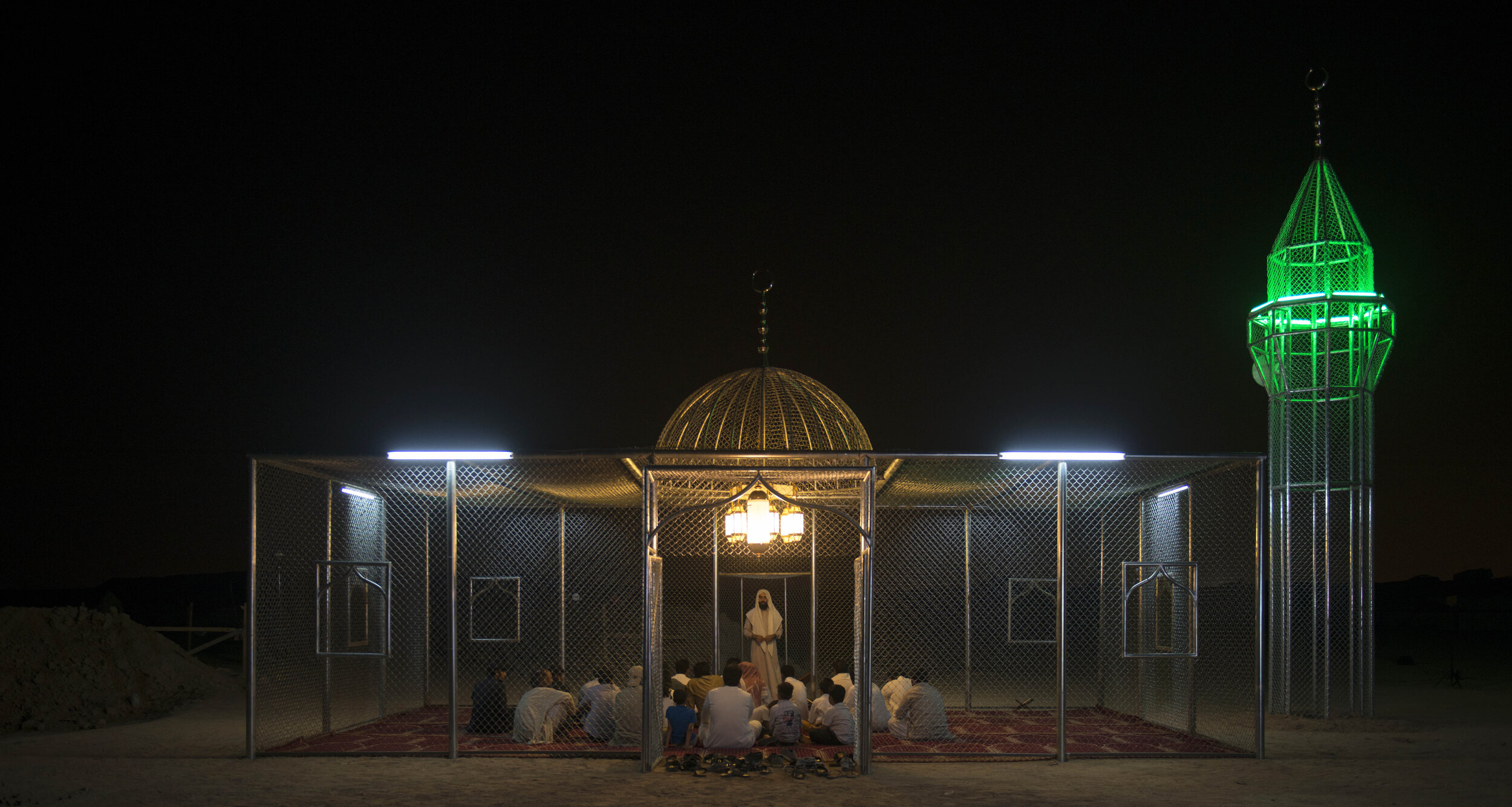
The mosque is a symbol of the power structures that rise above the individual; whether in the form of other brother, father, imam or state. The mosque is at once a free public place, and one where attendance is mandatory.